
If fragrance regularly leaves your skin red, itchy or tight, alcohol is a common culprit, not the scent itself. Most sprays rely on high concentrations of alcohol as a carrier, and that carrier can irritate sensitive or reactive skin long before the fragrance oils inside it do. Switching to an alcohol-free oil-based fragrance removes that specific irritant while keeping the scent intact.
Why Alcohol Is Such a Common Irritant
Alcohol is popular in perfumery because it evaporates quickly and helps a scent project outward, but that same evaporation can strip moisture from the skin's surface and disrupt its natural barrier. For skin that is already dry, eczema-prone or easily irritated, repeated daily exposure to alcohol-based sprays can make things worse over time, even if the reaction is not a full allergic response.
The NHS guidance on contact dermatitis lists fragrance and cosmetic ingredients among the common triggers for this kind of reaction, which is a useful starting point if you have noticed a pattern between wearing perfume and skin irritation.

How Oud Oil Differs From Alcohol-Based Perfume
Traditional oud oil is worn undiluted, applied in small amounts directly to pulse points rather than sprayed across the body. Without alcohol as a carrier, the fragrance sits closer to the skin and relies on body heat to release its scent gradually rather than projecting it all at once. For many people with sensitive skin, this alone makes a noticeable difference in comfort over a full day of wear.
That said, not every oil-based fragrance is automatically gentle. Formulation still matters. A well-made oud oil is pH-balanced for skin and free from unnecessary additives, whereas a poorly made one can still cause irritation regardless of the alcohol-free claim on the label.
Signs Your Fragrance May Be the Cause
It is easy to blame skincare products, laundry detergent or weather changes when skin flares up, and fragrance is often overlooked because it feels like a small part of the daily routine. A few patterns are worth watching for. Does irritation tend to appear on the neck, wrists or chest, the areas fragrance is usually applied, rather than more widespread across the body? Does it settle down on days you skip perfume entirely? Does switching brands or formulations change the pattern? Answering yes to these questions is a reasonable signal that fragrance, and specifically its alcohol content, is worth investigating before other causes.
What Hypoallergenic Actually Means in Practice
Hypoallergenic is not a regulated term with one fixed definition, so it is worth understanding what it should mean rather than taking it at face value. In practice, a genuinely hypoallergenic fragrance oil avoids common irritants, is formulated with skin compatibility in mind from the outset, and is transparent about its ingredient list rather than hiding behind the word parfum on a label.
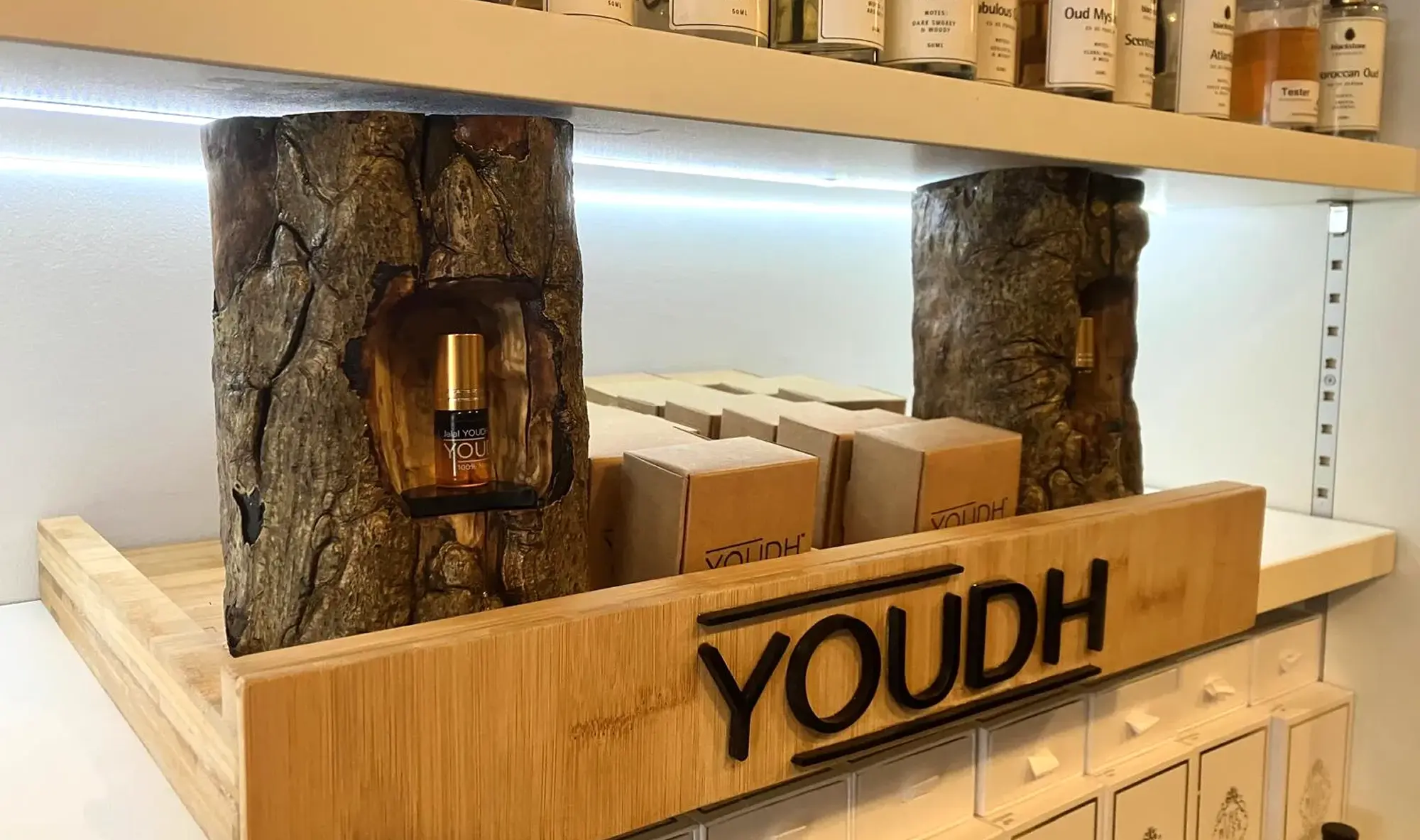
Checking YOUDH's oud oil range against these criteria, or doing the same with any oud brand, is a more reliable way to judge suitability than trusting marketing language alone.
Practical Tips if You Have Sensitive Skin
Patch test any new fragrance oil on a small area of skin, such as the inner wrist, and wait 24 hours before applying it more widely. Apply to freshly cleansed, moisturised skin rather than straight after exfoliating, since compromised skin is more reactive to anything placed on it. If you already know you react to alcohol-based sprays, reading about oud perfume oil without the alcohol is a sensible next step before assuming fragrance itself is off the table.
Beyond Alcohol: Other Ingredients Worth Checking
Alcohol is the most common irritant, but it is rarely the only one worth checking. Synthetic musks, certain preservatives and added colourants can also trigger reactions in sensitive skin, even in fragrances that are technically alcohol-free. This is why reading past the marketing claim on the front of a bottle and checking the actual ingredient list matters. A short, recognisable ingredient list is generally a better sign than a long one filled with unfamiliar chemical names, though it is not a guarantee on its own. Combined with a patch test, it gives a much clearer picture of whether a fragrance is likely to suit your skin before you commit to wearing it daily.
Questions Worth Asking Before You Buy
A short list of questions can save a lot of trial and error. Is the fragrance alcohol-free, and if not, how much alcohol does it contain relative to fragrance oil? Is the pH balanced for skin, or formulated primarily for projection with skin comfort as an afterthought? Are the ingredients listed clearly, or hidden behind a generic parfum entry? None of these questions require specialist knowledge to ask, and any brand confident in its formulation should be able to answer them without hesitation.
It is also worth remembering that sensitivity is individual. A formulation that suits one person's skin will not automatically suit another's, which is why patch testing matters even when a product markets itself as gentle or hypoallergenic. Treat those claims as a starting point for further checking, not as a guarantee.
The Takeaway
Sensitive skin does not have to mean giving up on fragrance altogether. Understanding what actually causes irritation, in most cases the alcohol carrier rather than the scent, makes it far easier to find a wearable alternative rather than avoiding perfume entirely. A little label reading and a short patch test go a long way toward wearing oud comfortably every day, rather than reserving it for occasions when a reaction feels like an acceptable risk. Once you know what to look for, choosing a fragrance stops being a gamble and becomes a fairly straightforward process of elimination.


