
Perfume occupies a different place in Arab culture than it does in most Western contexts. Where Western perfumery has historically been primarily about personal adornment and social presentation, the Arab tradition of fragrance is bound up with hospitality, spirituality, and a sense of the home as a scented environment. This distinction shapes not just the types of fragrance used but the way they are applied, the occasions on which they are used, and the social significance they carry.
Understanding this cultural context is essential for anyone who wants to engage seriously with Arabic perfume, whether as a buyer, a collector, or simply someone interested in understanding a tradition that has profoundly influenced the global fragrance industry.
The Historical Roots of Arabic Perfumery
The Arab tradition of perfumery has roots stretching back several thousand years. The incense trade routes that connected the Arabian Peninsula to India, East Africa, and the Mediterranean world in antiquity were among the most economically significant in the ancient world, and the trading cities of Arabia prospered on the demand for frankincense, myrrh, and oud that existed across the civilised world.The Islamic golden age, from the eighth to the thirteenth centuries, saw significant advances in the science and art of perfumery. Arab chemists, most notably the ninth-century polymath Al-Kindi and the physician Ibn Sina, developed and refined distillation techniques that allowed for the production of complex floral waters and essential oils with a precision previously impossible. Ibn Sina's work on rose water distillation established methods that are still foundational to perfumery today.
The specific tradition of oud-based perfumery on the Arabian Peninsula reflects the region's historical position at the nexus of the incense trade routes. Oud wood, imported from the forests of South and Southeast Asia, became central to the fragrance culture of the Gulf states, Saudi Arabia, and the wider Arab world, used both as incense and, as extraction techniques improved, as an ingredient in perfume oils. Royal Botanic Gardens Kew documents the botanical and ecological context of agarwood, which provides useful grounding for buyers who want to understand the raw material at the heart of the Arabic perfumery tradition.
The Role of Oud in Arab Culture
Oud is not merely an ingredient in Arabic perfumery. It is a cultural practice. The burning of oud wood as incense, a practice known as bakhoor, is central to Arab hospitality: guests are welcomed into homes with the smoke of burning oud wood wafted through the room and over their clothing, a gesture of generosity and welcome that carries deep cultural significance.The application of oud oil directly to the skin, typically on the pulse points and in the hair, is also a long-established practice. Oud-based perfume oils in the Arabic tradition are typically highly concentrated, applied in small quantities, and allowed to interact with the wearer's body chemistry over many hours. This is fundamentally different from the Western practice of spraying a diluted eau de parfum from a bottle.
For Arabic buyers, the quality of the oud itself is the primary consideration in any fragrance purchase. The distinction between wild and cultivated oud, between old and new oil, and between different regional origins is not arcane knowledge for specialists. It is common cultural literacy in communities where oud has been central to daily life for generations.
The Contemporary Arabic Perfume Industry
The contemporary Arabic perfume industry is centred primarily in the Gulf states, with Dubai occupying a particularly central position as both a production hub and a global retail market. Houses such as Ajmal, Amouage, Abdul Samad Al Qurashi, and Rasasi have built substantial international reputations, and the finest Arabic perfume houses are now considered peers of the great French maisons in terms of the quality and sophistication of their products.The Gulf perfume industry has also become a significant exporter of fragrance culture, as the Gulf diaspora has introduced Arabic fragrance practices to cities around the world, and as Western fragrance buyers have discovered Arabic perfume through specialist retailers, online communities, and the growing presence of Arabic perfume houses in international markets.
Alcohol-free perfume in the contemporary market ranges from traditional oud-heavy oils produced to centuries-old methods to modern compositions that blend Arabic ingredients with Western perfumery techniques. Buyers who understand this spectrum are better placed to identify products that genuinely reflect the tradition rather than simply borrowing its aesthetic.
Arabic Versus Western Perfumery: Understanding the Differences
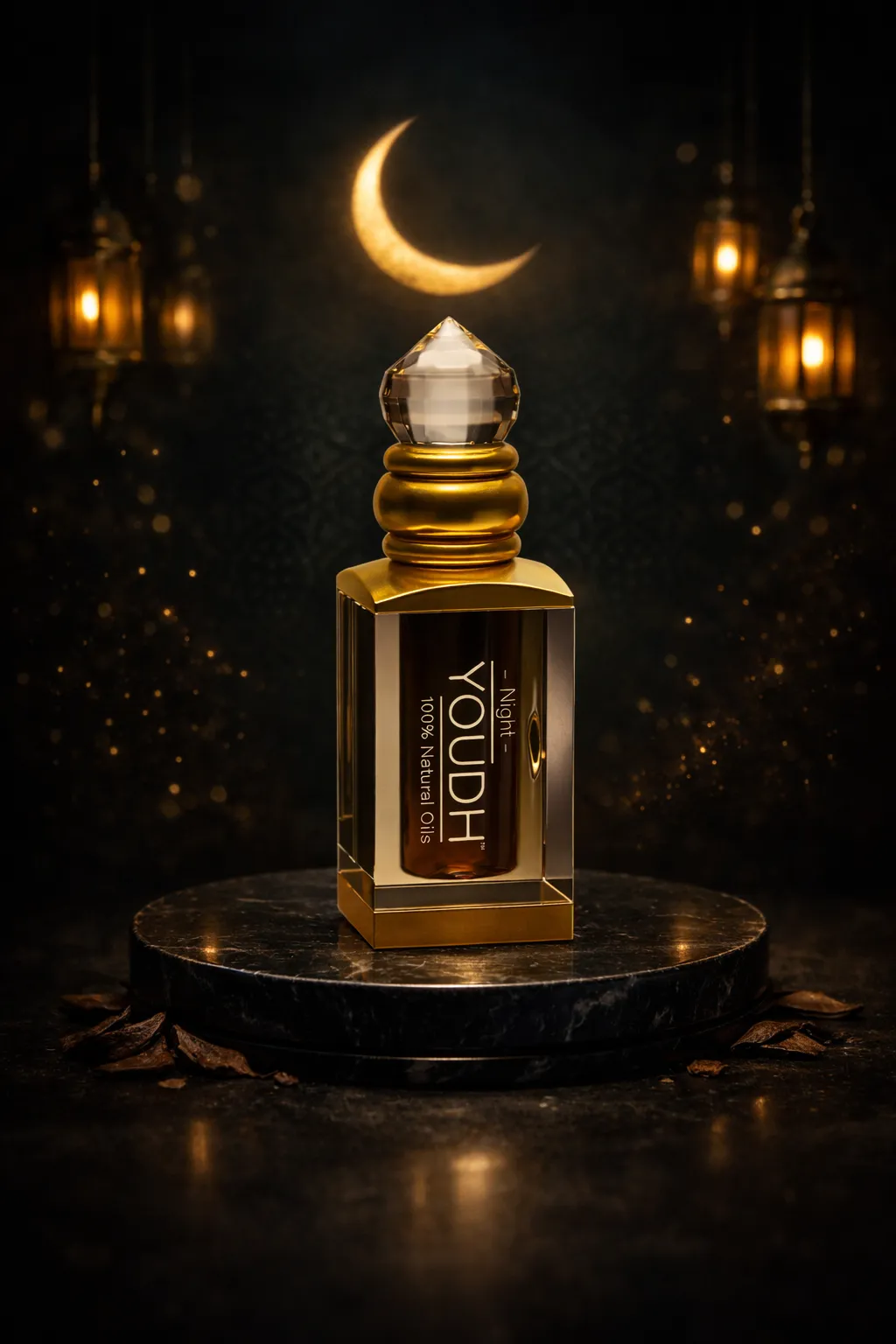
Youdh fragrance draws on the Arabic tradition, combining authentic oud ingredients with contemporary presentation standards that make the category accessible to international buyers. The differences between Arabic and Western perfumery traditions are not superficial. They reflect fundamentally different approaches to fragrance composition, application, and the relationship between a scent and its wearer.Western perfumery, as developed by the great French houses from the nineteenth century onwards, is typically characterised by a defined linear structure with top, middle, and base notes that evolve over time from initial application. It tends toward lighter concentrations for everyday wear, and it uses a very wide palette of natural and synthetic ingredients to achieve complex and varied compositions.
Arabic perfumery places more emphasis on the base. Oud, resins, woods, and musks are the dominant ingredients, and the compositions tend to be richer, heavier, and more persistent. Traditional Arabic perfumes often have little in the way of bright top notes: the oud and its accompanying materials are present from first application and remain consistent over many hours of wear.
These are not competing approaches: they are different traditions responding to different climates, cultures, and use contexts. The growing appreciation for Arabic fragrance traditions among Western buyers reflects a genuine interest in the depth, richness, and cultural resonance of an approach to perfumery that offers something genuinely distinct from the mainstream.
Key Arabic Fragrance Ingredients Beyond Oud
While oud is the most internationally recognised ingredient in Arabic perfumery, it is far from the only one. Frankincense, derived from Boswellia trees native to the Arabian Peninsula and East Africa, is another central ingredient with its own ancient history and distinct olfactory character. Rose, particularly the Bulgarian and taif rose varieties, is widely used in Arabic compositions, often combined with oud to create the classic rose-oud combination that is central to the Arabic tradition.Amber, in Arabic perfumery, refers not to fossilised tree resin but to a complex accord of labdanum, benzoin, and vanilla that provides a warm, sweet, resinous base. Sandalwood, particularly the Mysore variety from India, is another important ingredient, used for its smooth, creamy woody character that complements oud without competing with it. Musk in various forms, both natural and synthetic, provides diffusion and longevity.
The skill of an Arabic perfumer lies partly in the quality of the individual ingredients, which in the finest houses are sourced directly and held to very high standards, and partly in the art of combining them in proportions that achieve a balanced and harmonious result while preserving the character and complexity of each ingredient.
Finding Authentic Arabic Perfume in the Western Market
The global expansion of Arabic perfume has been accompanied by a proliferation of products that use Arabic imagery and naming conventions without delivering the substance of the tradition. Buyers who want authentic Arabic perfumery, grounded in genuine ingredients and the craft traditions of the Gulf, need to evaluate their sources carefully.Indicators of authenticity include transparency about ingredient sourcing, particularly with respect to the oud; a heritage in the Arabic perfumery tradition rather than simply a brand positioning; and the use of high-quality natural ingredients rather than synthetic approximations of traditional materials.
The most reliable route to authentic Arabic fragrance remains the specialist retailer who has direct relationships with the houses whose products they carry, and who can speak knowledgeably about the provenance and composition of what they sell. In an increasingly commoditised fragrance market, this kind of specialist expertise is genuinely valuable.
Work produced and reviewed by the PressSphera editorial desk. Every piece published under this byline has been checked against our accuracy, sourcing and disclosure standards before going live. Corrections and enquiries are welcome and are handled by the desk directly.
View all posts by PressSphera

