
Oud perfume occupies a category of its own in the world of fragrance. It is the most expensive natural ingredient in perfumery, it has been central to the olfactory traditions of the Middle East and South Asia for centuries, and in the past two decades it has moved from a specialist interest for fragrance connoisseurs to a mainstream luxury ingredient that shapes the direction of the global perfume market.
Understanding oud, what it is, where it comes from, how it is used in perfumery, and how to choose a fragrance that does it justice, is the starting point for anyone who wants to engage seriously with this ingredient. This guide covers the full picture.
What Oud Actually Is
Oud is an aromatic resin produced by Aquilaria trees, a genus of tropical hardwood native to the forests of Southeast Asia and parts of South Asia. The resin is not a natural secretion of healthy trees. It forms as a defensive response when the tree is infected by a particular species of mould, Phialophora parasitica, which triggers the production of a dense, dark, heavily scented resin in the infected heartwood.Not all Aquilaria trees produce oud. In fact, only a small percentage of trees in a forest will be infected, and the quality of the resin they produce varies significantly depending on the tree species, the nature of the infection, the age of the infected wood, and the conditions of the forest in which the tree grows.
The resin-saturated wood is known as agarwood, and it is from this wood that oud is extracted, either by steam distillation to produce an essential oil or through the traditional practice of burning the wood directly as incense. Both forms are used in contemporary perfumery, though steam-distilled oud oil is the primary form used in liquid fragrances.
The Varieties of Oud and Their Characteristics
Just as wine produced from the same grape variety varies significantly between regions and vintages, oud produced from Aquilaria trees varies considerably depending on its geographic origin. The major oud-producing regions, each with their own distinct olfactory profile, include Cambodia, India, Malaysia, Vietnam, Indonesia, and Bangladesh.Cambodian oud is generally considered among the most refined and is characterised by a smooth, sweet-woody profile with animalic depth and relatively low harsh or barnyard notes. Indian oud, particularly from Assam in northeast India, is earthier, more complex, and more assertively animalic, with a depth and intensity that appeals to traditionalists. Vietnamese oud is lighter and sweeter, with more resinous and green notes. Indonesian oud tends to be smokier and earthier than Southeast Asian varieties.
Within each region, further variation comes from the species of Aquilaria, the age of the infected wood, and the extraction method. Old-growth Aquilaria trees that have been infected for many years produce denser, more complex resin than younger trees, and the oil extracted from them commands a corresponding premium.
The Price of Oud and What Drives It
Oud oil of genuine quality is extraordinarily expensive. The finest grades, produced from old-growth wild Aquilaria trees, command prices in the range of thousands of dollars per gram, making them significantly more expensive than gold. Even mid-grade oud oil, produced from cultivated trees or younger wild sources, trades at prices that place it among the most expensive natural ingredients in any category.Several factors drive this pricing. The limited supply of wild Aquilaria wood, which is listed on CITES Appendix II due to overharvesting, is the fundamental constraint. The labour-intensive production process, particularly for the highest grades where manual selection of resin-rich wood is required, adds further cost. And the sustained and growing global demand, driven by the expansion of oud-based perfumery into Western markets, keeps upward pressure on prices.
The combination of high prices and strong demand has also driven the development of cultivated oud, where Aquilaria trees are deliberately inoculated to induce resin production. Cultivated oud lacks the full complexity of the finest wild material but has improved significantly in quality and provides a more sustainable and price-accessible source of the ingredient. Oud perfume that uses cultivated oud can still deliver an authentic and high-quality olfactory experience, particularly when blended by an experienced perfumer.
Oud in Contemporary Perfumery
The arrival of oud in Western perfumery can be traced to the early 2000s, when a handful of niche perfume houses began introducing oud-centric fragrances to an audience that was increasingly interested in unusual and complex ingredients. Tom Ford's Oud Wood, released in 2007, is often credited with accelerating the mainstream adoption of oud in Western markets, demonstrating that a fragrance built around this ingredient could achieve commercial success beyond the core oud enthusiast community.Today, oud appears in everything from mass-market flankers to ultra-luxury limited editions, and the range of interpretations is correspondingly wide. Some oud fragrances present the ingredient in a relatively pure form, allowing its natural complexity to dominate. Others use oud as a structural element in a more complex composition, combining it with roses, spices, woods, or musks to create fragrances that reference the oud tradition while offering something distinctly contemporary.
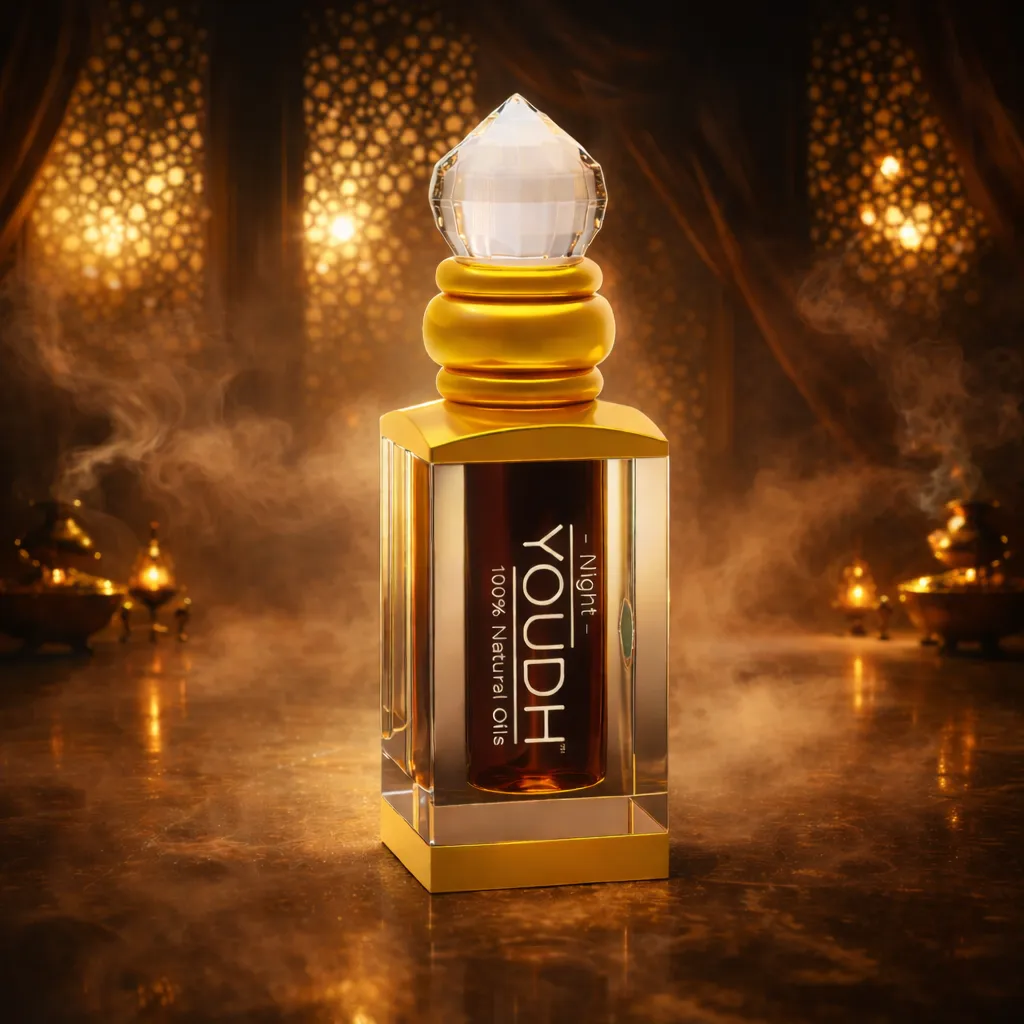
Youdh represents a direct connection to the traditional oud perfumery of the Arabian Peninsula, where oud has been central to fragrance culture for centuries. This tradition, which prioritises the quality and authenticity of the raw material above all else, offers a different perspective from the commercial Western interpretation of oud.
How to Choose an Oud Perfume
Choosing an oud perfume requires a different approach from choosing a conventional Western fragrance. Because oud is such a dominant and distinctive ingredient, the character of the oud itself, its origin, grade, and how it has been extracted and processed, has a profound effect on the overall character of the fragrance in a way that is unusual compared to most other perfumery ingredients.The most reliable guide is direct experience. Sampling a range of oud fragrances, from different geographic origins and different approaches to the ingredient, is the best way to develop the reference points needed to make an informed choice. Pay attention to how the fragrance develops over several hours, since oud is a particularly tenacious base note with significant dry-down character.
Consider also the concentration and application method. Traditional oud-based fragrances are often presented as concentrated oils applied directly to the skin, while contemporary oud perfumes in Western bottle formats are typically eau de parfum or parfum concentrations. Both approaches can deliver excellent results, and the choice is primarily one of personal preference and usage context.
Caring for and Storing Oud Fragrances
Oud fragrances, particularly those based on high-quality natural oud oil, benefit from careful storage. Heat, light, and oxygen are the primary enemies of fragrance quality, and storing oud perfumes in a cool, dark environment away from direct sunlight will preserve their quality over time. According to Royal Botanic Gardens Kew, agarwood is one of the most valuable plant products in international trade, with the combination of high demand and supply constraints from wild sources driving sustained price increases over recent decades.Oud oil, in particular, can actually improve with age, much like fine wine or aged wood. Old oud oils that have been stored correctly for years or decades are highly sought after by collectors and connoisseurs, and the investment in a high-quality oud fragrance from a reputable source can therefore hold its value well over time.
For those new to oud perfumery, the most important first step is simply to experience the ingredient directly, without preconceptions formed by the synthetic oud approximations that appear in many mainstream fragrances. Once you have experienced a genuinely high-quality natural oud, the difference becomes immediately apparent.
Work produced and reviewed by the PressSphera editorial desk. Every piece published under this byline has been checked against our accuracy, sourcing and disclosure standards before going live. Corrections and enquiries are welcome and are handled by the desk directly.
View all posts by PressSphera

